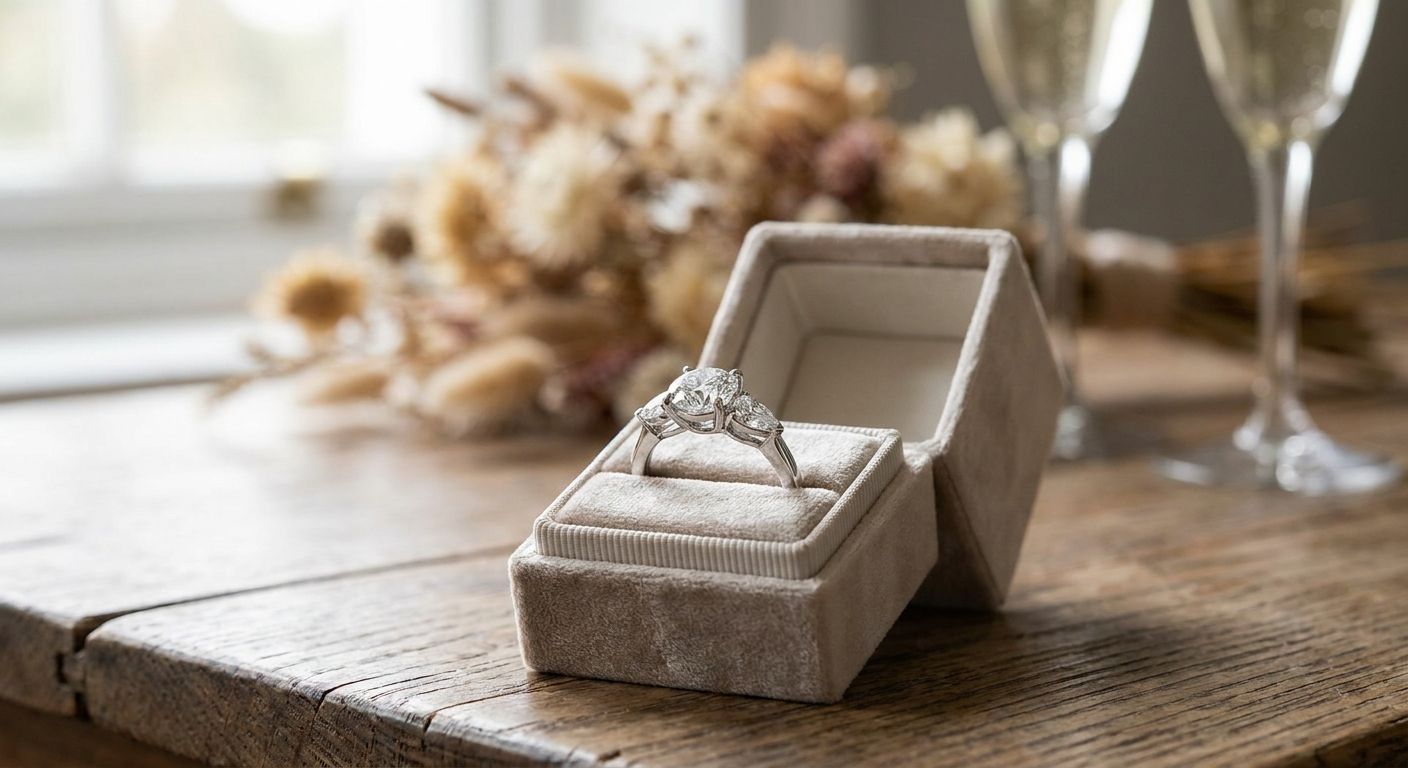
Three stones, one meaning: past, present, and future. That's the whole pitch behind a three-stone anniversary ring, and in 2026 the round brilliant three-stone ring is the best overall pick, the oval three-stone ring wins for anyone who wants a finger-elongating effect, and the emerald-cut three-stone ring is the best statement piece for a milestone year like a 10th or 25th anniversary.
- Round brilliant three-stone rings are the best overall three stone anniversary ring pick for 2026 — classic proportions, easiest resale, widest setting options.
- Oval three-stone rings elongate the finger and read larger per carat than round stones of the same weight.
- Emerald-cut three-stone rings are the pick for a milestone anniversary that wants a visible, architectural look.
- Cushion-cut suits anyone chasing a softer, vintage-leaning three-stone anniversary ring.
- Marquise side stones stretch a smaller center diamond visually without changing the carat total.
Why this matters
An anniversary ring isn't an engagement ring redo. It's a second purchase, usually bought with more confidence and a clearer budget than the first one, and the three-stone format exists specifically to mark time — one stone for where you started, one for where you are, one for where you're headed. Raul Diamonds builds these made to order with IGI or GIA certification on every center stone, which matters more here than it does on a simple solitaire: three stones means three sets of proportions that have to sit together correctly, and a certificate is the only way to confirm that before the ring ships.
Getting the shape and stone-ratio decision right up front saves a resize or a re-set later. That's the whole point of ranking these by use case instead of just listing shapes.
What makes the best three-stone anniversary ring
- Stone shape harmony — center and side stones should share a cut family (round with round, elongated with elongated) or the eye catches the mismatch immediately
- Carat weight balance — side stones that are too small look like an afterthought; too large and they compete with the center stone
- Setting security — shared-prong and basket settings hold three stones more securely day-to-day than open galleries
- Metal and finger shape — narrower bands read more elegant on smaller hands; wider bands support heavier three-stone totals
- Certification — IGI or GIA paperwork on the center stone, minimum, confirms the 4 C's match what you're paying for
- Symbolism fit — some couples want the past-present-future story visible in the design; others want it subtle
Three-stone anniversary rings at a glance
| Style | Best for | Standout feature | Key limitation |
|---|---|---|---|
| Round brilliant three-stone | Overall / classic anniversary gift | Maximum brilliance, easiest to resize | Least distinctive silhouette |
| Oval three-stone | Elongating the finger | Larger face-up look per carat | Bow-tie effect possible in low-quality cuts |
| Emerald-cut three-stone | Milestone / statement anniversary | Clean architectural lines | Inclusions show more than in brilliant cuts |
| Cushion-cut three-stone | Vintage-leaning romance | Soft corners, warm sparkle pattern | Less fire than round or oval |
| Marquise three-stone | Stretching carat size on a budget | Elongated points maximize visual spread | Pointed tips need protective prongs |
1. Round Brilliant Three-Stone Ring: best overall for a classic anniversary gift
The round brilliant is the default for a reason: 58 facets built specifically to maximize light return, and a shape that pairs with almost any side-stone cut without a symmetry problem. For a three-stone anniversary ring, round center and round sides give you the most brilliance per carat of any combination on this list.
Round brilliant three-stone pros:
- Widest range of setting styles (prong, halo, channel)
- Easiest shape to resize or re-set later
- Best resale and appraisal familiarity among jewelers
Round brilliant three-stone cons:
- Costs more per carat than fancy shapes at the same clarity and color grade
- Least distinctive look if you want the ring to stand out as a design choice
Best for: couples who want a safe, timeless three-stone anniversary ring with no design risk. Verdict: Buy.
2. Oval Three-Stone Ring: best for an elongated, finger-flattering look
An oval center stone reads larger than a round stone of the same carat weight because the surface area spreads lengthwise. Paired with round or trapezoid side stones, an oval three-stone ring gives you brilliance close to a round cut with a more elongated silhouette.
Oval three-stone pros:
- Appears larger face-up than a round stone at equal carat weight
- Flatters most finger shapes and lengths
- Plays well with both vintage and modern settings
Oval three-stone cons:
- Prone to a visible "bow-tie" shadow across the center if the cut proportions are off
- Slightly less brilliance than a round brilliant of the same quality grade
Best for: anyone prioritizing perceived size over raw sparkle. Verdict: Buy.
3. Emerald-Cut Three-Stone Ring: best for a milestone anniversary statement
The emerald cut trades brilliance for clarity of line — long, rectangular step-cuts that show off a diamond's transparency instead of scattering light. For a 10th, 20th, or 25th anniversary, a three-stone emerald-cut ring reads as a deliberate, grown-up upgrade rather than a copy of the original engagement ring. Check the full emerald-cut engagement rings guide for how center-stone quality grading works on this cut specifically.
Emerald-cut three-stone pros:
- Distinct, architectural look that doesn't resemble a standard engagement ring
- Large visible surface area draws the eye immediately
- Pairs well with baguette side stones for a coordinated art deco line
Emerald-cut three-stone cons:
- Inclusions and color are more visible than in brilliant cuts, so grading matters more
- Fewer sparkle facets means less fire in low light
Best for: a milestone anniversary where you want the ring to look intentionally different from the original set. Verdict: Buy, if you're grading carefully.
4. Cushion-Cut Three-Stone Ring: best for vintage-leaning romance
Cushion cuts round off the corners of a square or rectangular stone, producing a softer sparkle pattern than round or emerald cuts. In a three-stone setting, cushion centers paired with cushion or round sides lean toward heirloom styling rather than a modern minimalist look.
Cushion-cut three-stone pros:
- Warm, romantic sparkle pattern distinct from a round brilliant
- Reads as vintage without needing an actual antique setting
- Forgiving of small facing-up size differences between stones
Cushion-cut three-stone cons:
- Less fire and scintillation than round or oval cuts
- Harder to match perfectly symmetrical side stones at smaller carat sizes
Best for: couples who want the three-stone story told in a softer, older-feeling design. Verdict: Buy, for the right aesthetic.
5. Marquise Three-Stone Ring: best for stretching visual size on a budget
Marquise cuts are long, pointed ovals — the most elongated shape in common use, and the one that stretches a smaller carat total the furthest across the finger. As side stones flanking a round or oval center, marquise points create the widest visual spread of any combination on this list without raising the total carat weight.
Marquise three-stone pros:
- Maximizes visual spread per carat of any shape on this list
- Distinctive silhouette that photographs well
- Works as accent stones even when the center stone is modest in size
Marquise three-stone cons:
- Pointed tips are the most vulnerable part of any diamond shape and need protective prong placement
- Harder to source a perfectly symmetrical matched pair for side stones
Best for: a couple who wants a bigger-looking ring without a bigger carat budget. The full lab grown diamond cost guide breaks down how carat, cut, and clarity trade off against each other. Verdict: Buy, with reinforced prongs specified.
How this ranking was built
Every style above gets weighed against the same six criteria: shape harmony between center and side stones, carat balance, setting security, metal and finger fit, certification standard, and how visibly the piece tells the past-present-future story. Round brilliant wins overall because it scores well across all six with no weak point. The other four each win one category outright — that's why this reads as a decision tree, not a leaderboard.
“Past, present, future is a promise you make in metal and diamond — the shape just decides how loudly it says it.”
Which three-stone anniversary ring should you choose?
If you're not sure, default to the round brilliant three-stone ring — it's the safest choice across resale, resizing, and day-to-day wear in 2026. Choose oval if the recipient already wears elongated shapes well. Choose emerald-cut for a milestone year that calls for a visibly different design from the original engagement ring. Every option above ships made to order at Raul Diamonds with IGI or GIA certification on the center stone, so the decision that actually matters is shape and proportion, not whether the paperwork holds up.
FAQ
What's the best three-stone anniversary ring for 2026?
The round brilliant three-stone ring is the best overall pick for 2026 because it balances brilliance, resale familiarity, and ease of resizing. Oval and emerald-cut versions win for specific looks — elongation and statement styling, respectively.
Is a three-stone ring better than a solitaire for an anniversary gift?
Neither is objectively better — a three-stone ring adds the past-present-future symbolism a solitaire doesn't carry. Couples upgrading from a solitaire engagement ring often choose three-stone specifically for that distinction.
What do the three stones in a three-stone ring represent?
The three stones traditionally represent a couple's past, present, and future together. It's the most common reason couples pick this style specifically for an anniversary rather than a first engagement ring.
Should the side stones match the center stone's shape?
Matching shapes (round with round, elongated with elongated) reads as more intentional and is easier for a jeweler to set symmetrically. Mixed shapes work but require more careful proportion planning.
How much smaller should the side stones be than the center stone?
Side stones are typically set noticeably smaller than the center stone so the eye reads one clear focal point. Exact proportions vary by design, which is why a made-to-order build lets you confirm the ratio before it's finalized.
Are lab-grown diamonds a good choice for a three-stone anniversary ring?
Lab-grown diamonds carry the same IGI or GIA grading standards as mined diamonds for cut, color, clarity, and carat. For a three-stone setting, that certification matters even more since you're grading three stones instead of one.
What metal works best for a three-stone anniversary ring?
14K yellow, white, or rose gold all support three-stone settings; the choice comes down to what the recipient already wears daily. Wider bands generally support heavier three-stone carat totals more securely.
Can I get a three-stone ring made to order?
Yes — a made-to-order build lets you choose the center shape, side-stone shape, carat ratio, and metal before the ring is finalized rather than picking from fixed stock.
One last thing
The detail most people miss: side-stone shape matters more than side-stone size for how "finished" a three-stone ring looks. A round center with two mismatched pear-cut sides reads as unbalanced even when the carat math is correct — shape harmony is the first thing a jeweler checks, and it should be the first thing you check too.