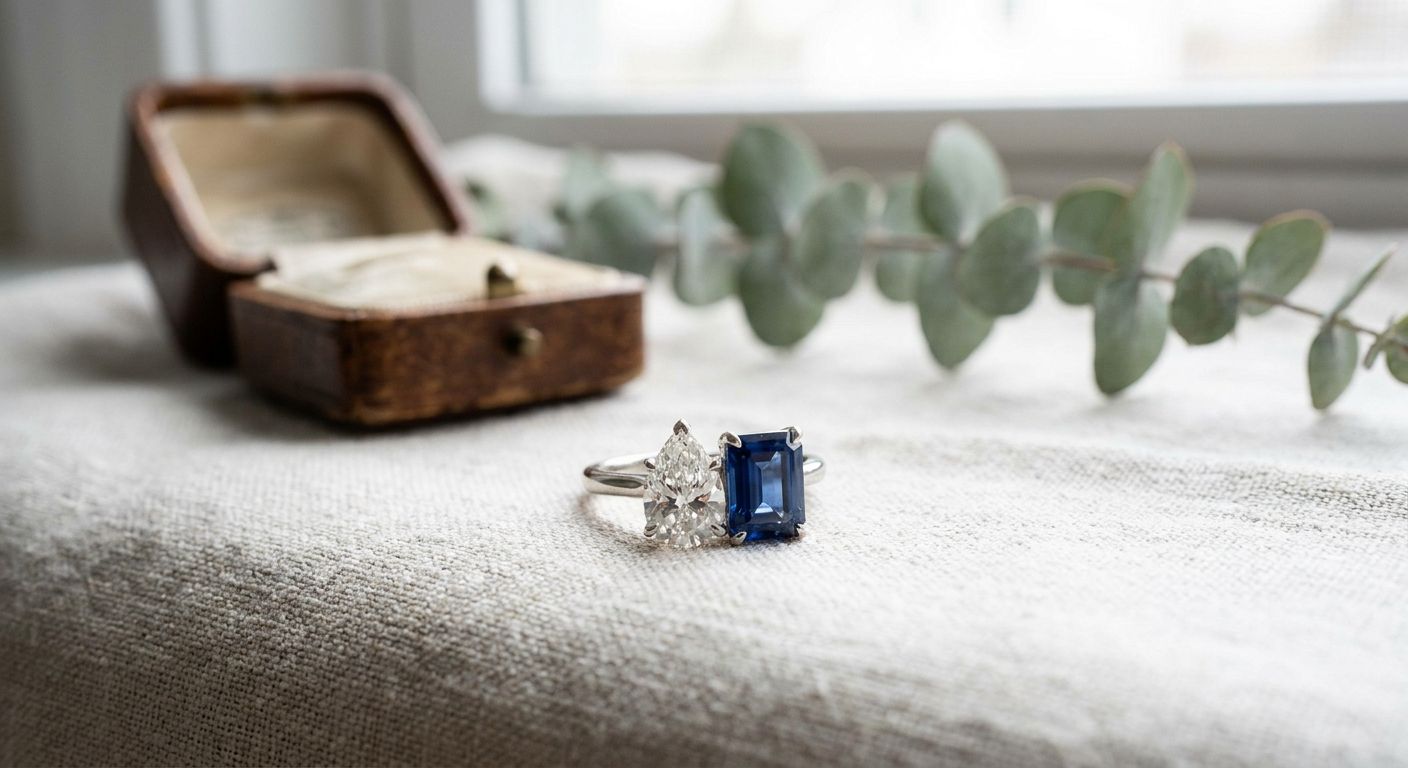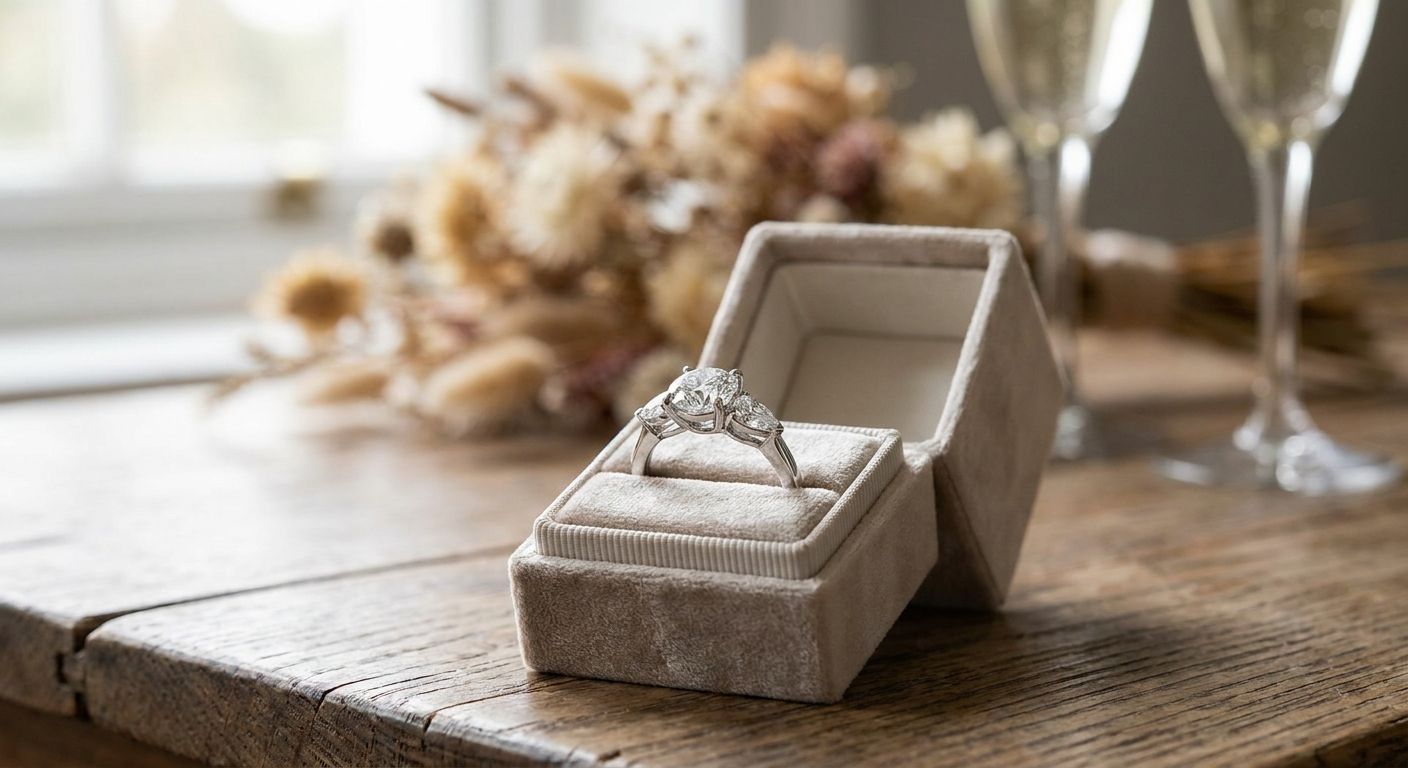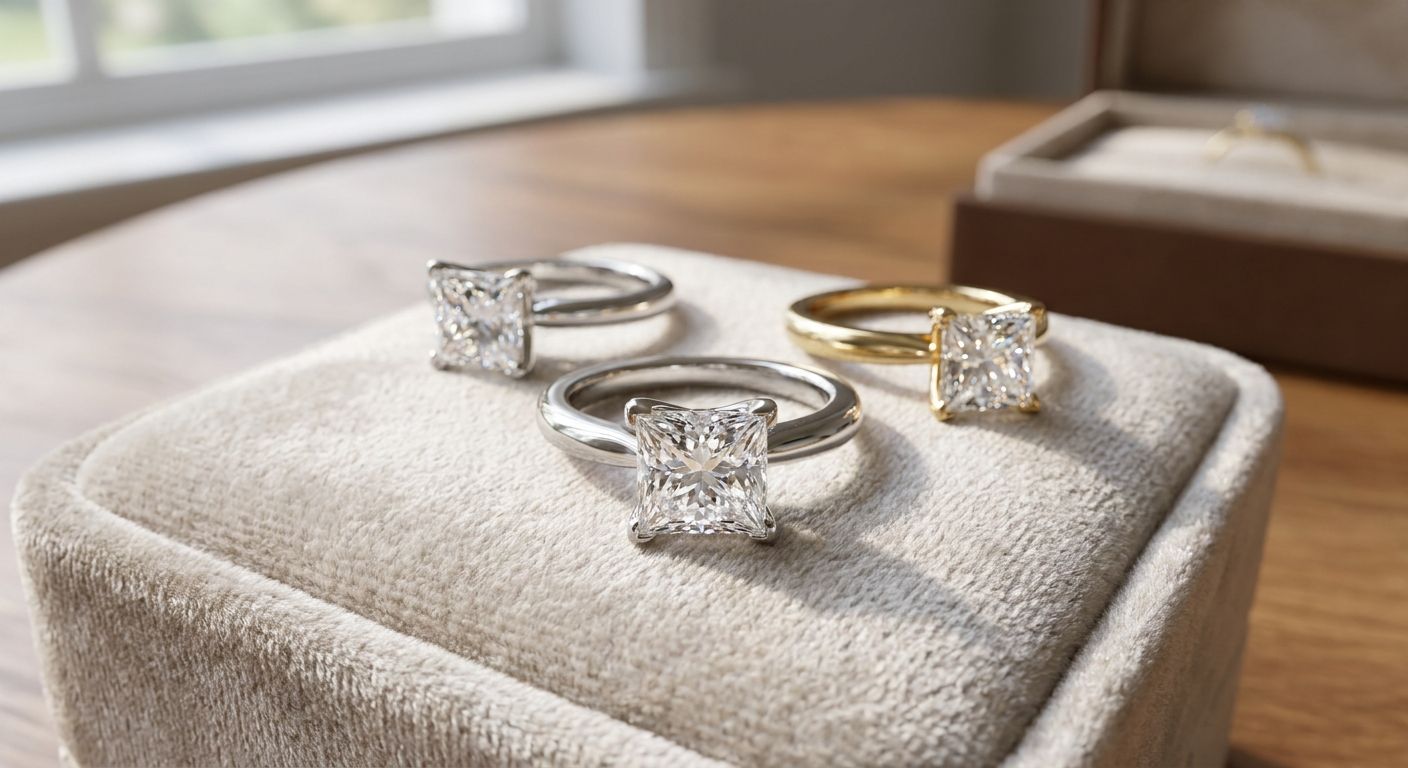
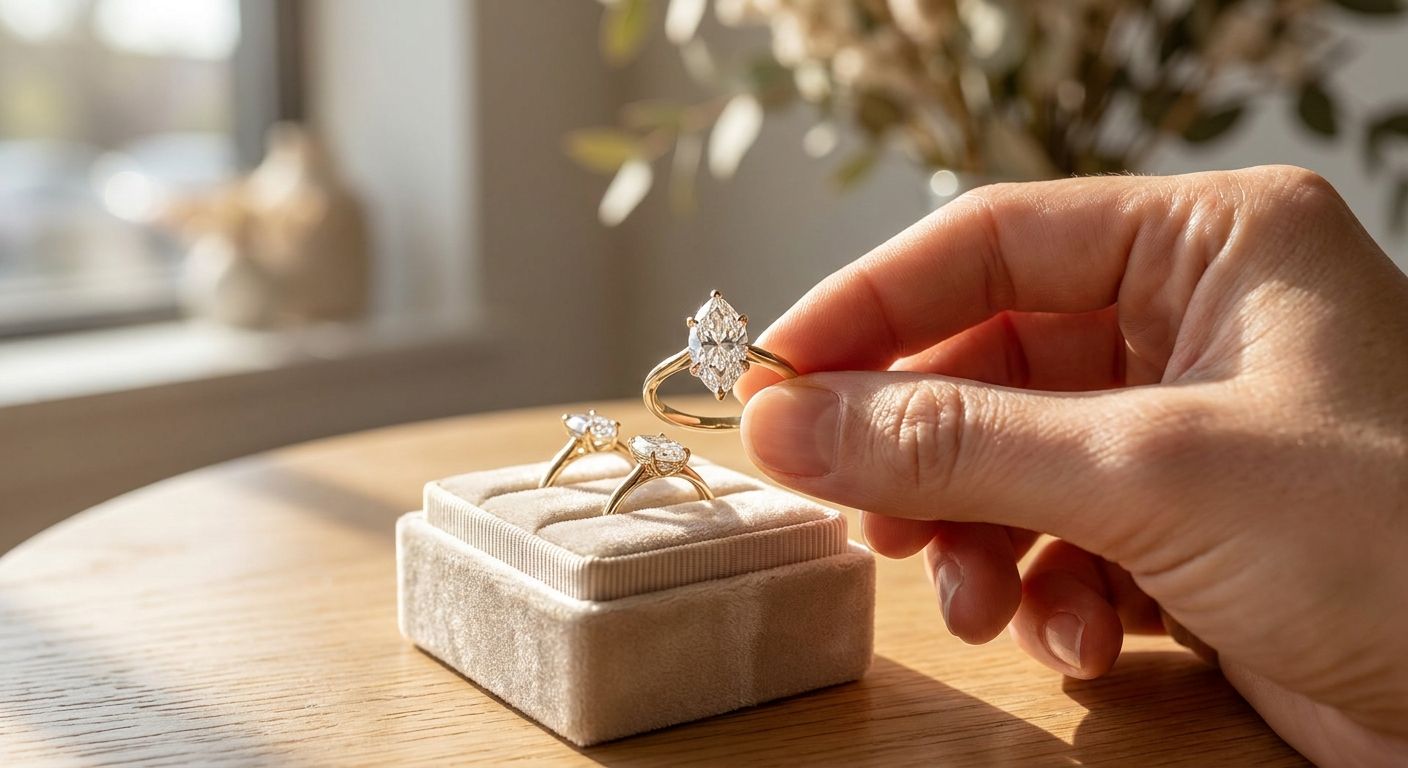
Marquise cut diamonds spread more surface area per carat than round or cushion stones, which is why the shape reads bigger on the hand than its carat weight suggests. In 2026, the marquise cut engagement ring is pulling buyers who want that elongated, finger-flattering look in a lab-grown stone with an IGI or GIA report behind it. This guide ranks the five marquise ring styles worth building through Raul Diamonds' made-to-order line, so you know which setting fits your priority before you commit to one.
- Classic marquise solitaire wins overall for showing the most visible stone per carat — the safest marquise cut engagement ring pick for 2026.
- Hidden halo marquise adds sparkle without extra visible metal, best for brides who want brilliance over size.
- East-West marquise turns the point sideways for a modern, editorial look instead of a traditional point-to-knuckle set.
- Three-stone marquise carries the most total carat weight across the hand and suits a past-present-future design.
- Pavé shank marquise pushes sparkle down the band, ideal for brides who plan to stack wedding bands against it.
Why this matters
A marquise cut engagement ring isn't one product — it's a shape you build a setting around, and the setting decides how the stone wears day to day. Get the length-to-width ratio wrong or skip point protection and you end up with a ring that looks pinched or chips at the tips within a year.
The five styles below cover the real decision points buyers hit in 2026: size perception, sparkle, modern versus traditional orientation, total carat spread, and how the ring pairs with a wedding band later. Every one of them can be built through Raul Diamonds as a made-to-order lab-grown diamond engagement ring with an IGI or GIA certificate on the center stone.
What makes the best marquise cut engagement ring
- Length-to-width ratio between 1.75 and 2.00:1 — keeps the points symmetrical instead of looking stretched or stubby
- Certification on the center stone — an IGI or GIA report confirming cut, color, clarity, and carat for a lab-grown diamond
- Point protection — V-tip prongs or a bezel guard at both tips, the two spots most likely to chip
- Setting match to hand shape — elongated cuts flatter shorter fingers more than round or cushion cuts do
- Band width for daily wear — thinner shanks show more stone; wider shanks wear better long-term
- Made-to-order flexibility — ability to adjust metal, carat, and setting without settling for a fixed catalog SKU
Marquise cut engagement ring styles at a glance
| Style | Best for | Standout feature | Key limitation |
|---|---|---|---|
| Classic marquise solitaire | Maximizing size per carat | Nothing competes with the stone for attention | Points are exposed, need careful prong protection |
| Hidden halo marquise | Extra sparkle without bulk | Halo sits under the crown, invisible from above | Adds cost to resize later |
| East-West marquise | A modern, non-traditional look | Point faces sideways, not toward the knuckle | Harder to pair with a straight wedding band |
| Three-stone marquise | Most total carat weight | Side stones frame the center for extra spread | Heavier on the hand, less ideal for manual work |
| Pavé shank marquise | Sparkle down the band | Diamonds continue past the center setting | More prongs mean more long-term maintenance |
1. Classic marquise solitaire: best marquise cut engagement ring for maximizing size
A classic solitaire puts the marquise diamond on a plain shank with nothing competing for attention. Because the shape spreads surface area lengthwise, a solitaire marquise looks larger than a round or cushion stone of the same carat weight, which is the whole appeal for buyers working with a fixed carat budget.
Classic marquise solitaire pros:
- Shows the maximum visible stone for the carat weight
- Works with any metal — yellow, white, or rose gold
- Simplest setting to resize or repair later
Classic marquise solitaire cons:
- Exposed points need V-tip or double-prong protection
- No secondary sparkle if the center stone has lower clarity
Best for: buyers who want the shape to do the work without added design. Verdict: Buy.
2. Hidden halo marquise: best marquise cut engagement ring for extra sparkle
A hidden halo tucks a ring of small diamonds under the marquise center stone, invisible from a straight-on view but catching light from the side. It boosts perceived brilliance without changing how big the ring looks from the top, which matters if the center stone is on the smaller end of your carat range.
Hidden halo marquise pros:
- Adds sparkle without visible metal bulk around the center stone
- Makes lower-clarity centers look brighter under normal light
- Still reads as a clean solitaire from above
Hidden halo marquise cons:
- More prongs and metalwork mean more spots to inspect during cleanings
- Resizing costs more than a plain solitaire band
Best for: buyers who want brilliance more than raw size. Verdict: Buy.
3. East-West marquise: best marquise cut engagement ring for a modern look
Setting the marquise sideways instead of point-to-knuckle is the fastest way to make a traditional cut look current. The horizontal orientation shows off the full length of the stone across the finger instead of down it, and it photographs differently than every other ring on this list.
East-West marquise pros:
- Distinct silhouette that stands out from traditional vertical settings
- Full stone length visible across the finger
- Pairs well with a minimalist plain band
East-West marquise cons:
- Harder to match with a curved or contoured wedding band later
- Points sit closer to the side of the hand, slightly more exposed to knocks
Best for: buyers who want the marquise cut engagement ring to look deliberately non-traditional. Verdict: Buy if the wedding band is being custom-fit to match.
4. Three-stone marquise: best marquise cut engagement ring for total carat weight
A three-stone setting flanks the marquise center with two smaller stones — round, trillion, or tapered baguette — adding visible carat weight across the hand without needing a larger, pricier center stone. It's the classic past-present-future design, but it works just as well as a pure carat-stretching move.
Three-stone marquise pros:
- Adds visible sparkle and carat weight beyond the center stone
- Symbolic design appeals to buyers who want meaning built in
- Side stones balance the elongated shape of the center
Three-stone marquise cons:
- Heavier and slightly bulkier for daily manual work
- More total stones mean more inspection points over time
Best for: buyers prioritizing total sparkle across the hand over a single large center stone. Verdict: Buy for the carat-conscious shopper.
5. Pavé shank marquise: best marquise cut engagement ring for stacking
A pavé shank lines the band with small diamonds on either side of the marquise center, carrying the sparkle past the setting itself. It's the pick for brides who plan to stack a wedding band tight against the engagement ring and want continuous shine across both.
Pavé shank marquise pros:
- Sparkle continues down the band instead of stopping at the center stone
- Looks intentional stacked against a plain wedding band
- Available in yellow, white, or rose gold to match a stacking set
Pavé shank marquise cons:
- More prongs along the shank means more long-term maintenance
- Resizing is more involved than a plain-shank solitaire
Best for: brides who already know they're stacking bands. Verdict: Buy if stacking is part of the plan.
“A marquise cut with a length-to-width ratio between 1.75 and 2.00 keeps the point symmetrical instead of looking pinched.”
How we ranked
Each style above got measured against the same criteria: how it protects the points, how it affects perceived size, how it wears daily, and how easily it fits a made-to-order build. The classic solitaire ranks first because it satisfies the core reason people choose marquise in the first place — size per carat — without adding complexity. Everything below it trades some of that simplicity for a specific benefit: sparkle, orientation, carat spread, or stacking.
Which marquise cut engagement ring should you choose?
If you're undecided, start with the classic marquise solitaire — it's the lowest-risk build, shows the most stone for the money, and every other style on this list is really a variation on it. Add a hidden halo if the center stone's clarity is on the lower end of your budget range, and check the diamond engagement ring cost guide before locking in a carat weight. Every marquise style here builds to order through Raul Diamonds with IGI or GIA certification on the center stone.
FAQ
What is a marquise cut diamond?
A marquise cut diamond is an elongated, pointed-oval shape with two symmetrical tips. It's one of the oldest fancy cuts still used in engagement rings today.
Does a marquise cut engagement ring look bigger than a round cut?
Yes. A marquise diamond spreads more surface area lengthwise than a round or cushion stone of the same carat weight, so it reads larger from the top.
What length-to-width ratio is best for a marquise diamond?
A ratio between 1.75 and 2.00:1 keeps the shape symmetrical. Below that range the stone looks stubby; above it, the points can look overly sharp.
Do marquise diamonds need special prongs?
Yes. The two points are the most vulnerable part of the stone, so V-tip or double-prong settings are used to protect them from chipping.
Is a marquise cut engagement ring still in style for 2026?
Marquise has moved from a niche vintage pick back into mainstream demand in 2026, driven largely by East-West and hidden halo settings that modernize the classic shape.
Can a marquise cut lab-grown diamond be certified?
Yes. Lab-grown marquise diamonds get the same IGI or GIA grading as mined diamonds, covering cut, color, clarity, and carat weight.
What's the difference between marquise and oval cut rings?
Marquise has two pointed tips, while oval is fully rounded at both ends. Marquise tends to look more dramatic and elongating; oval reads softer and safer for everyday wear.
How do you protect a marquise ring's points from chipping?
Use V-tip or double-prong settings at both points, avoid resting the hand on the ring's tips, and have prongs inspected during routine jewelry checkups.
One last thing
The marquise cut has a well-documented origin story: it's widely credited to King Louis XV of France in the 1740s, reportedly commissioned to mirror the shape of a smile. Three centuries later, the same elongated silhouette is what makes a marquise cut engagement ring look larger than its carat weight on a modern hand — the geometry hasn't changed, only the diamond source has.